
The elm - impressive deciduous trees with a long history
Elms are impressive deciduous trees with a distinctive growth habit and a rich history. Elms have been a part of our planet long before humans and have been documented in fossils as early as the Tertiary Period.
There are an estimated 30-40 different elm species worldwide. They are generally flexible in terms of their location, but each species has certain preferences.
Ecological importance of the elm
The elm is a landscape-defining tree species and provides a valuable habitat in mixed forests and floodplains. Despite the drastic decline caused by Dutch elm disease, it continues to play an important role in functioning ecosystems.
- Habitat for over 80 insect species, such as specialized beetles, wild bees or butterflies such as the elm hairstreak, which lays its eggs exclusively on elm trees
- Important spring flowering plant and thus one of the first pollen sources for bees, bumblebees and other pollinators
- As a long-established native tree species, it is an important component of the natural flora of Central Europe
- Their deep root system contributes significantly to soil stability, protects against erosion and ensures groundwater regulation


Age, Growth & Fruits
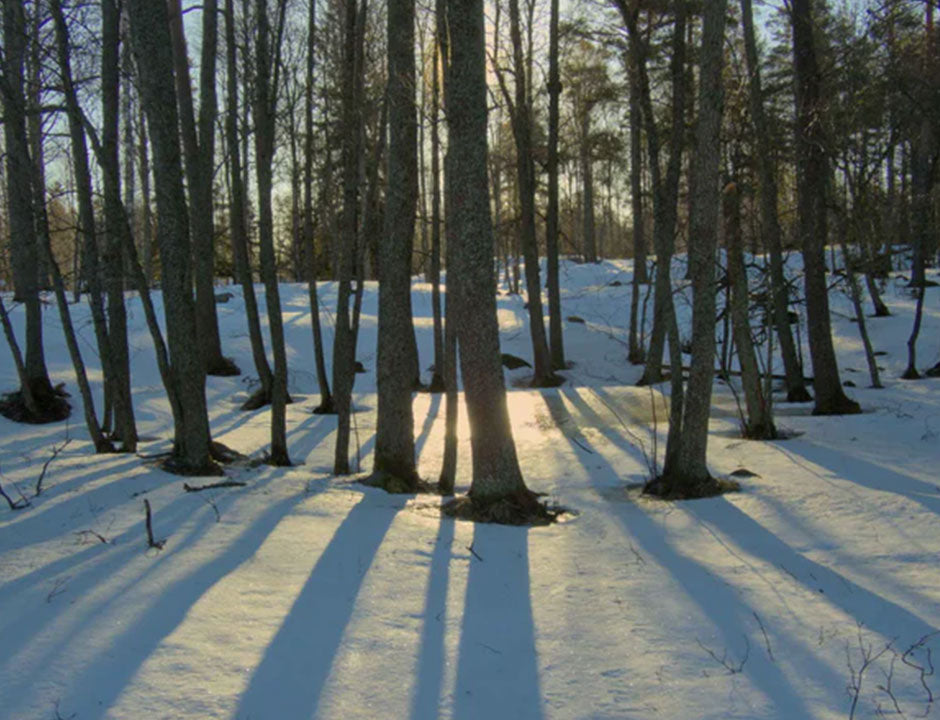
Elms often grow into impressive trees, which, depending on the species, can reach between 30 and 40 meters . Although their natural lifespan is severely limited by Dutch elm disease, they can easily reach 200 to 400 years .
The crown shape is often oval to round, but with age they often branch out heavily and form broad, majestic crowns.
Elms often tend to produce suckers, which helps with propagation but can sometimes make it difficult to control elms in the garden.
The bark of the elm changes considerably throughout its life cycle, from smooth and greenish-gray in its early years to dark gray and deeply cracked or net-like furrowed.
Elms also produce a special type of fruit: winged nuts or winged fruits. The small, approximately 1-2 cm long nut is surrounded by a circular or elliptical wing.


Well-known elm species
Wych elm (Ulmus glabra )
-
Distribution : Low mountain ranges to the Alpine foothills, often in gorges, along streams or in mixed beech forests.
-
Soil : Deep, nutrient-rich, fresh to moist.
-
Light : Partial shade to light.
-
Altitude : Up to approx. 1,500 m above sea level
Field elm (Ulmus minor)
-
Distribution : Rather warm-loving, in lowlands, on field and forest edges, in hardwood floodplains.
-
Soil : Dry to fresh, calcareous soils, also tolerates clayey sites.
-
Light : Light loving, rather heat loving.
-
Altitude : Up to approx. 600–800 m above sea level
European white elm (Ulmus laevis)
-
Distribution : Typical of moist alluvial forests, river valleys and fen forests.
-
Soil : Nutrient-rich, moist to wet, tolerates waterlogging.
-
Light : Partial shade to light.
-
Altitude : Mainly in the lowlands, rarely above 500 m.
Dutch elm disease – cause, progression & consequences
Dutch elm disease is one of the most devastating tree diseases in Europe. Within just a few decades, it has massively decimated the once abundant and distinctive elm population.
Dutch elm disease is caused by a fungus (2 species) that attacks the conductive pathways in the sapwood of the elm and thus prevents water transport - similar to ash dieback.
The fungus itself is not capable of flight, but it is transmitted by the elm bark beetle.
It is possible that the severely affected elm species could develop genetic resistance to the fungus over time, although this cannot currently be estimated.
In this way, attempts are being made to counteract Dutch elm disease by using different breeds or less endangered elm species.
Use & application of elm wood
Its wood is among the most traditional in Europe. It is considered elastic and tough. Elm wood (also or predominantly called "elm") has long been in high demand as a functional wood, for example, for tools, furniture, bow making, and even hydraulic structures, due to its exceptional durability.

Even though elm is no longer available in the large quantities it once was, its striking grain and durability make it a popular furniture wood.
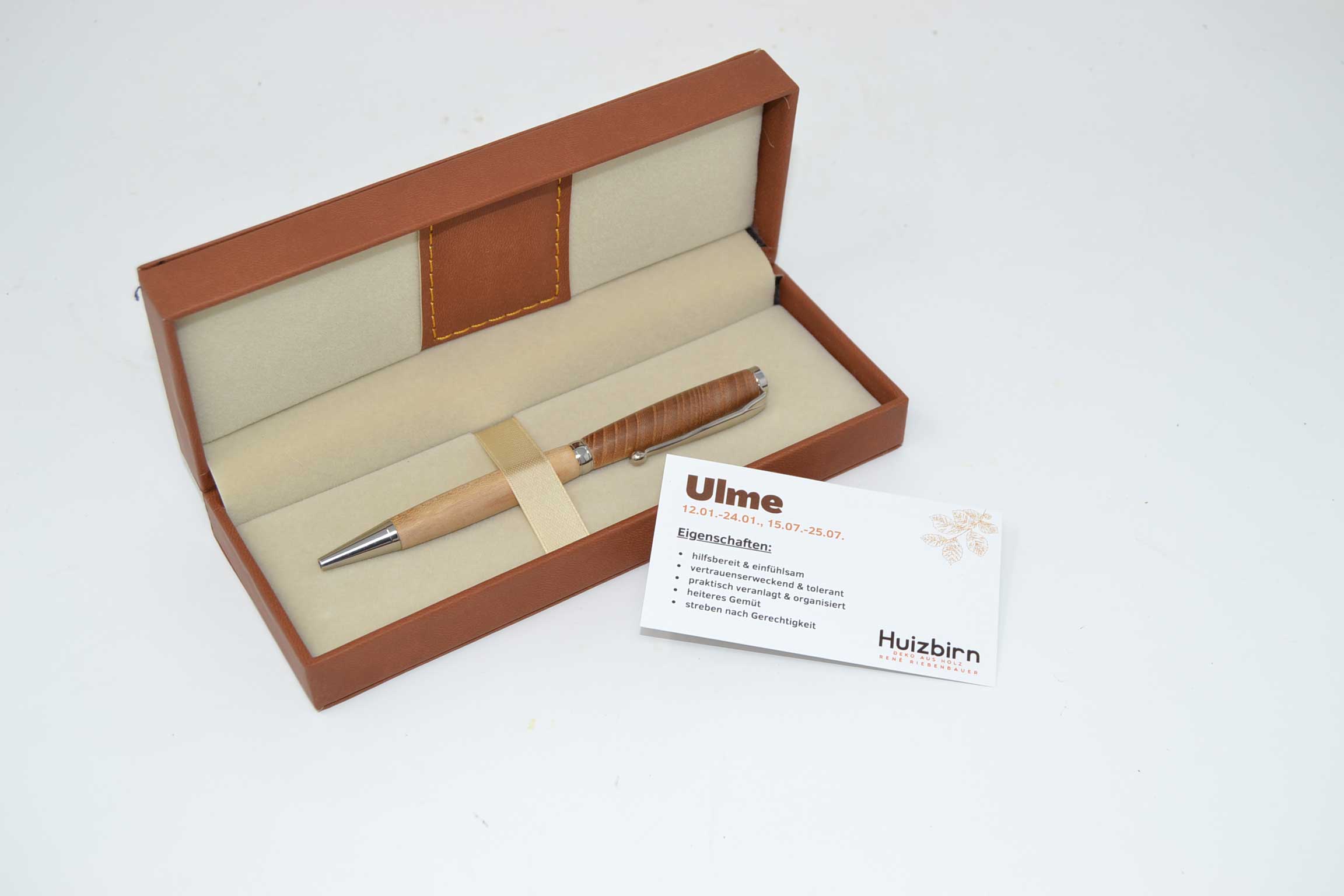
Elm wood is also in great demand for inlays, handicrafts (such as wooden bowls , spice mills, wooden kitchen accessories , writing utensils ), musical instruments and wood turning.
Elm wood is considered to be very distinctive and expressive. The sapwood is often light gray to yellowish, while the heartwood is often warm brown with reddish, greenish, or olive hues.
With a Brinell hardness of 35-40, the wood is considered a hardwood. It is very tough, break-resistant, and can be bent permanently.





Leave a comment
This site is protected by hCaptcha and the hCaptcha Privacy Policy and Terms of Service apply.